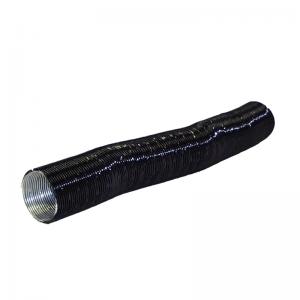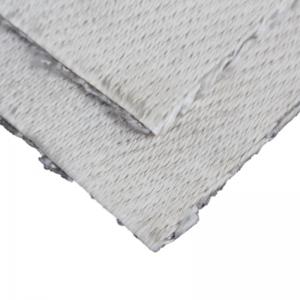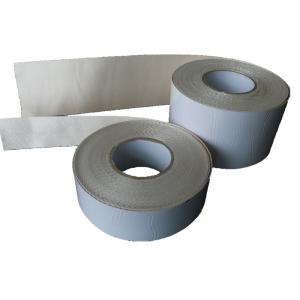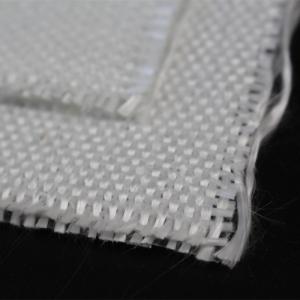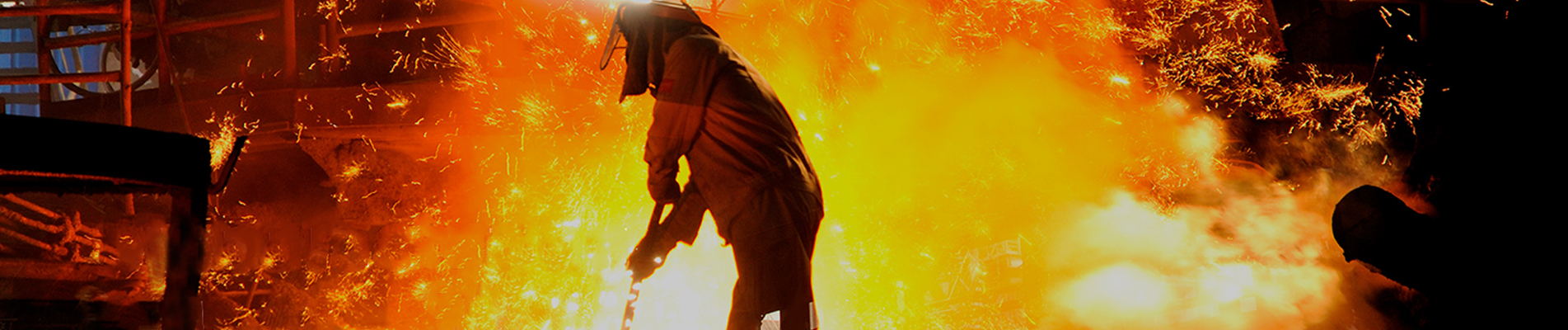
Vermiculite coated fiberglass fabric is used in fabric expansion joints where a flexible textile layer must tolerate high temperature, surface abrasion and repeated movement. In a multilayer expansion joint, it may help protect temperature-sensitive layers, reinforce the flexible belt and provide an additional thermal barrier.
It should not, however, be specified as though one roll of fabric performs every function of the expansion joint. Gas sealing, chemical resistance, insulation, mechanical reinforcement, weather protection and movement accommodation may require different materials and separate layers.
BSTFLEX supplies Vermiculite Coated Fiberglass Fabric in several weights and thicknesses for industrial fabrication. BSTFLEX also manufactures complete Non-Metallic Fabric Expansion Joints according to duct dimensions, temperature, pressure, movement and process conditions.
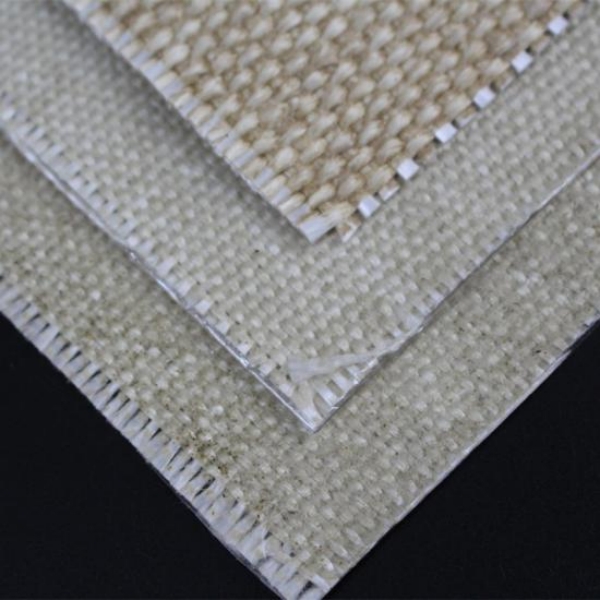
The material is normally selected for thermal protection, reinforcement and durability rather than as a universal gas or chemical barrier.
The woven fiberglass base provides a flexible textile structure. The vermiculite mineral treatment helps protect the fiberglass surface against severe heat, flame contact and abrasion.
Depending on the expansion joint design, vermiculite coated fiberglass fabric may be used to:
The exact function must be identified on the expansion joint cross-section. Calling it simply an “expansion joint fabric” does not explain whether it is the hot-side layer, insulation-retaining cloth, reinforcement ply or another part of the assembly.
Industrial fabric expansion joints are commonly built from several layers because no single textile normally provides optimum temperature resistance, chemical resistance, gas sealing, flexibility and outdoor durability at the same time.
| Possible layer | Primary function | Typical selection concern |
|---|---|---|
| Hot-side fabric or inner tube | Faces the process side and protects inner components | Gas temperature, abrasion, dust and flow conditions |
| Thermal cloth layer | Provides heat resistance and supports the insulation system | Temperature at the cloth, flexibility and retained strength |
| Insulation layer | Reduces heat transfer toward the outer belt materials | Thickness, density, compression and maximum service temperature |
| Gas or vapor barrier | Limits process-gas or moisture penetration | Chemical composition, condensation and leakage requirement |
| Reinforcement layer | Adds dimensional stability and mechanical strength | Movement cycles, tensile load, pressure and vibration |
| Outer cover | Protects the assembly against weather and external damage | UV, water, oil, abrasion and ambient exposure |
Vermiculite coated fiberglass may perform more than one supporting function, but it should not automatically be described as the gas-tight, chemically resistant or weatherproof layer.
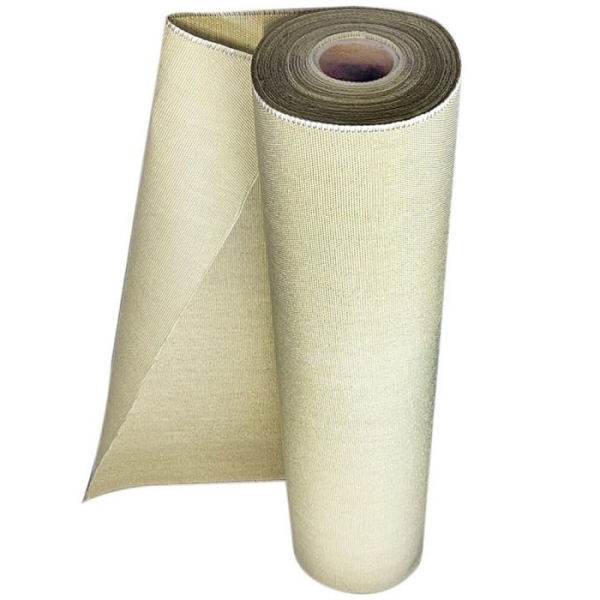
A woven fiberglass textile is not automatically gas-tight. The weave, coating, seams, joints, bolt holes and clamped edges can all create leakage paths.
If the expansion joint must control process-gas leakage, specify:
The gas or vapor barrier may require another material selected for the actual process chemistry. Vermiculite coated fiberglass can then serve as a thermal and reinforcing layer that helps protect that barrier from excessive temperature.
A statement such as “vermiculite fiberglass is heat resistant” does not confirm gas impermeability or chemical compatibility.
One of the most important purchasing questions is where the temperature is measured.
A duct may carry gas at 700°C while the outer expansion joint cover operates at a much lower temperature because insulation and internal layers reduce heat transfer. Conversely, a fabric close to the gas stream may experience a temperature approaching the process temperature.
The RFQ should therefore distinguish:
BSTFLEX Vermiculite Coated Fiberglass Fabric is published for high-temperature applications up to approximately 815°C / 1500°F depending on exposure time and operating conditions. This value should be applied to the selected fabric layer, not automatically to the entire expansion joint.
A continuous service temperature describes prolonged operation under the conditions assigned to the selected fabric grade. A peak or intermittent temperature describes a higher temporary exposure.
When the duct experiences temperature excursions, provide:
A fabric that remains physically present after a short heat excursion may still lose flexibility, coating integrity or retained strength. “No visible hole” is not a complete acceptance criterion for a repeatedly moving expansion joint.
High-temperature capability does not establish resistance to every process gas.
Specify the gas composition, moisture level, dust loading and any expected condensation. Include sulfur compounds, acids, alkalis, solvents, oil mist or other process contaminants where relevant.
Condensation can be particularly important because a gas that appears manageable at operating temperature may form a more aggressive liquid when the system cools during shutdown.
Where chemical resistance or vapor containment is required, another barrier layer may be necessary. Vermiculite coated fiberglass can protect and reinforce the assembly but should not be assigned chemical-barrier performance without suitable evidence.
BSTFLEX supplies standard vermiculite coated fiberglass constructions from approximately 0.8 mm to 3.0 mm, with current standard weights from approximately 615 g/m² to 1900 g/m².
Heavier fabric can provide greater thickness, thermal mass and mechanical durability, but it does not automatically provide:
Greater thickness can also affect bending behavior and seam bulk. A very heavy cloth may be appropriate for a thermal insulation layer but less suitable where the belt must repeatedly fold through a small movement radius.
The selected specification should balance thermal protection, flexibility, mechanical strength and fabrication requirements.
| Reference | Nominal weight | Nominal thickness | Standard width |
|---|---|---|---|
| FGF-VC-0.8 | 615 g/m² | 0.8 mm | 100 cm |
| FGF-VC-1 | 816 g/m² | 1.0 mm | 100 cm |
| FGF-VC-1.5 | 1020 g/m² | 1.5 mm | 100 cm |
| FGF-VC-2 | 1380 g/m² | 2.0 mm | 100 cm |
| FGF-VC-2.5 | 1680 g/m² | 2.5 mm | 100 cm |
| FGF-VC-3 | 1900 g/m² | 3.0 mm | 100 cm |
These are standard roll-material options. The appropriate expansion joint construction must still be determined from the application. Special width, roll length, cut panels and fabricated components can be evaluated according to project requirements.
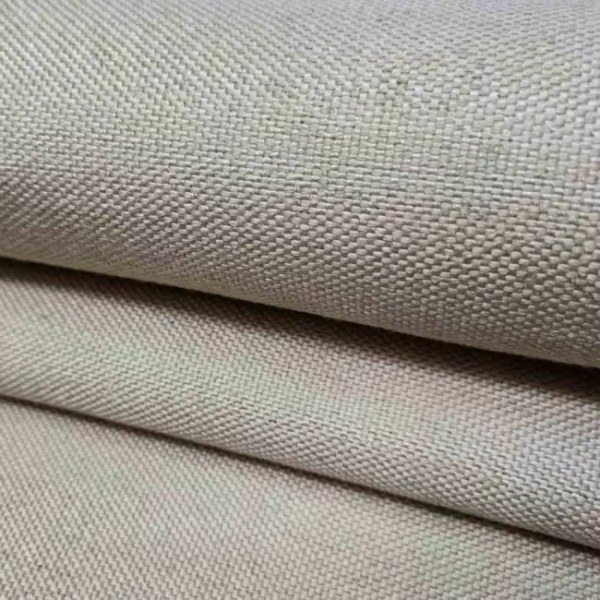
An expansion joint must accommodate defined movement between connected duct sections or equipment. The cloth is only one component of the flexible element.
Provide movement requirements separately:
Do not assume that the maximum axial and maximum lateral movements listed separately can occur simultaneously. Combined movement can place a different strain on the belt.
Movement capability also depends on:
A heavier vermiculite fabric may improve thermal protection but can also change the bending and folding behavior of the completed belt.
Fabric thickness alone does not establish the pressure rating of an expansion joint.
The RFQ should state:
Use clear pressure units and specify whether the values are gauge or absolute.
Negative pressure can pull the flexible belt inward toward a flow liner or duct edge. Positive pressure can place load on the belt, seams and clamps. These conditions require review of the full expansion joint construction, not only the strength of the vermiculite fiberglass layer.
High gas velocity, abrasive dust and turbulence can damage flexible textile layers even when their temperature capability is adequate.
A metal flow liner may be used to shield the flexible element from direct flow and particulate abrasion. The liner geometry must allow the specified joint movement without contacting or cutting the fabric belt.
An insulation pillow may be used to reduce the temperature reaching outer layers. The pillow construction may include high-temperature textile covers, insulation media and supporting mesh.
When vermiculite coated fiberglass is used around an insulation pillow, specify whether it acts as:
The fabric role should be shown clearly on the drawing.
The flat fabric may meet its material requirements while the fabricated joint fails at a seam, splice or clamped edge.
Specify:
Thread must be selected for the temperature and mechanical load at the seam. A high-temperature fabric does not automatically protect a lower-rated sewing thread.
Seams should also be positioned away from severe folding or high-strain locations where practical.
Rectangular joints concentrate strain around corners. Corner geometry, seam position and belt development require careful review.
A flat fabric strip should not be ordered solely from duct width and height. The supplier also needs the installed gap, flange arrangement, corner construction and required movement.
Round joints may be supplied as closed belts or open-ended belts for site joining. The RFQ should define the diameter, face-to-face dimension, attachment method and whether field splicing is required.
For both shapes, distinguish the duct dimensions from the developed fabric dimensions. They are not necessarily the same.
Before comparing quotations, identify what the supplier is expected to provide.
The buyer receives vermiculite coated fiberglass fabric for its own cutting and fabrication. The order should specify grade, weight, thickness, width, roll length and inspection requirements.
The supplier provides panels, insulation-pillow covers or another fabricated textile component according to a drawing. Seam, thread and dimensional requirements must be included.
The supplier provides the multilayer belt or flexible element but not necessarily the metal frames, liner or hardware.
The quotation may include the flexible belt, frames, clamping bars, liner, insulation components and attachment hardware.
A roll-material price should not be compared directly with a quotation for a complete engineered expansion joint.
Before replacing an expansion joint belt, record the damage pattern and operating history.
Inspect for:
A tear next to a metal edge may indicate contact or inadequate clearance. Damage near the clamp may indicate an attachment problem. General heat damage may indicate insufficient insulation or a higher-than-expected layer temperature.
Changing to a thicker fabric without identifying the failure cause may only delay the same problem.
| RFQ item | Information required |
|---|---|
| Supply scope | Roll fabric, cut panel, sewn component, replacement belt or complete joint |
| Duct geometry | Round or rectangular dimensions, flange arrangement and installed gap |
| Temperature | Normal gas temperature, design temperature, excursions and expected fabric-layer temperature |
| Process medium | Gas composition, moisture, dust, chemicals and possible condensation |
| Pressure | Normal, design, vacuum and fluctuating pressure conditions |
| Movement | Axial, lateral, angular and combined movement with cycle frequency |
| Fabric requirement | Base construction, thickness, weight, width and applicable tolerances |
| Layer function | Hot-side cloth, insulation cover, reinforcement layer or another specified position |
| Fabrication | Thread, seams, splices, cuffs, holes and edge reinforcement |
| Documentation | Required technical data, inspection records and customer specifications |
| Quantity | Prototype, maintenance replacement or production demand |
It can form part of an expansion joint belt, but the full construction depends on temperature, pressure, gas composition, movement and leakage requirements. High-temperature cloth alone may not provide the required gas barrier, weather cover or complete structural performance.
It should not automatically be specified as gas-tight. Woven fabric, seams, cut edges and attachment holes can permit leakage. Where gas containment is required, specify the barrier layer and the leakage test for the completed joint.
The current BSTFLEX grade is published for high-temperature applications up to approximately 815°C / 1500°F depending on exposure time and operating conditions. The relevant value is the temperature at the fabric layer, not only the process-gas temperature.
There is no universal thickness. The correct construction depends on the layer function, temperature, movement, mechanical load and fabrication geometry. Standard BSTFLEX options range from approximately 0.8 mm to 3.0 mm.
Not automatically. Pressure capacity depends on the complete joint, including all layers, seams, clamps, geometry and support components. Fabric thickness alone cannot establish the assembly pressure rating.
Not as a direct substitution without review. Vermiculite fabric is normally selected for higher-temperature thermal protection, while silicone coated fiberglass may be selected for flexibility, moisture resistance and external surface protection. They may perform different functions in the same assembly.
Yes. BSTFLEX can supply standard rolls, cut panels and fabricated textile components according to drawings, dimensions and operating requirements.
For roll material, send BSTFLEX the required thickness, weight, width, roll length, quantity and intended layer position. Review the available Vermiculite Coated Fiberglass Fabric specifications as the starting point.
For a replacement flexible belt or complete assembly, provide duct dimensions, attachment details, temperature, pressure, gas composition, movement and photographs of the existing installation. BSTFLEX can evaluate the requirements through its Non-Metallic Fabric Expansion Joint range.
Additional fiberglass, silica, ceramic and coated textile options are available in the High Temperature Fabric category.
Contact BSTFLEX for material selection, samples and a project quotation. State clearly whether the inquiry is for roll fabric, a fabricated textile component, a replacement belt or a complete expansion joint.

 English
 français
 Deutsch
 русский
 italiano
 español
 português
 Nederlands
 العربية
 日本語
 한국의
 Türkçe
 Polski
 Tiếng Việt
 slovenský