pesanan (moq):
1
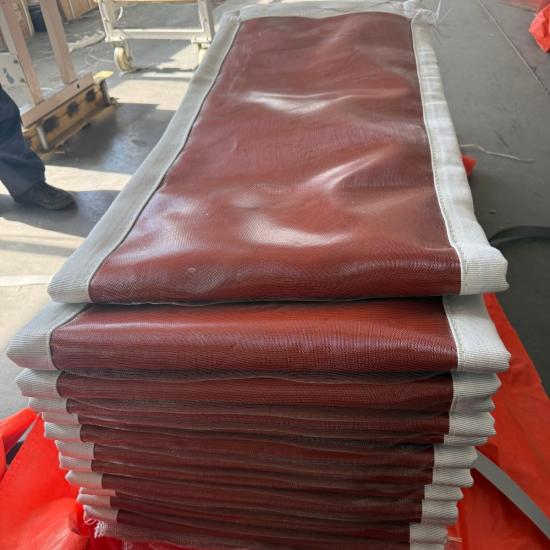
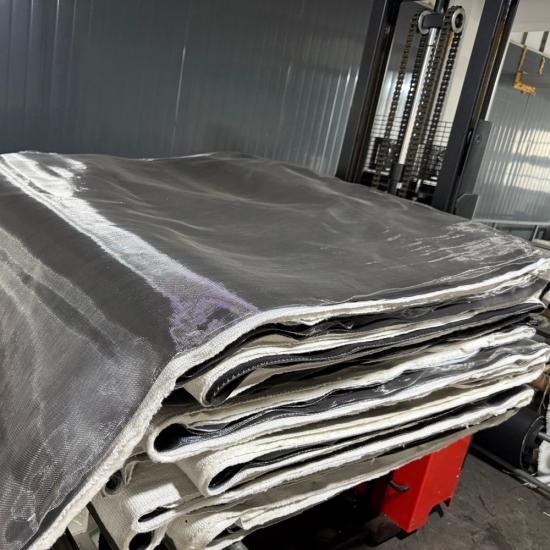
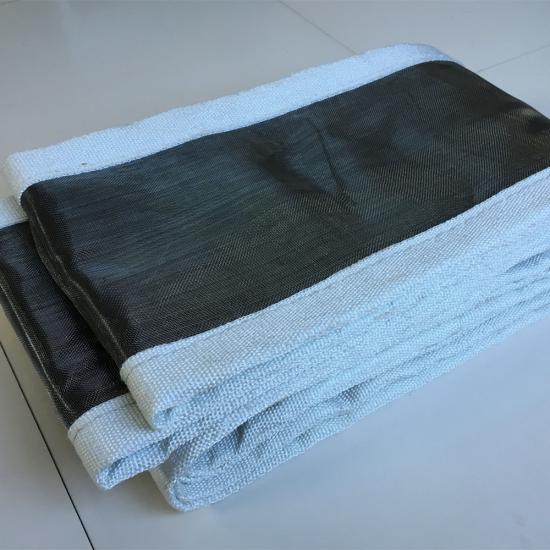
Sambungan Ekspansi Kain Non-Logam BSTFLEXadalah konektor fleksibel yang dirancang khusus untuk saluran udara industri, sistem udara panas, pembuangan, dan gas buang di mana pemuaian termal, getaran, pergerakan peralatan, atau ketidaksesuaian pemasangan harus diakomodasi tanpa mentransfer beban berlebihan ke saluran udara dan peralatan yang berdekatan.
Tidak seperti komponen logam yang kaku, sebuahsambungan ekspansi kainMenggunakan satu atau lebih lapisan tekstil fleksibel, kain berlapis, penyegelan, dan isolasi yang dipilih sesuai dengan suhu operasi, komposisi gas, kondisi tekanan, persyaratan pergerakan, dan lingkungan sekitarnya. Elemen fleksibel dapat mengakomodasi perpindahan aksial, lateral, dan sudut sambil mempertahankan koneksi terkontrol antara dua bagian saluran.
BSTFLEX memproduksi bentuk bulat, persegi panjang, persegi, dan bentuk khusus untuk aplikasi tertentu.sambungan ekspansi non-logamuntuk produsen peralatan OEM, kontraktor saluran udara, sistem pembangkit listrik, pabrik semen, peralatan pengolahan baja, tungku industri, sistem ventilasi, dan instalasi proses suhu tinggi lainnya.
| Produk | Sambungan Ekspansi Kain Non-Logam |
| Nama Alternatif | Sambungan Ekspansi Kain, Sambungan Ekspansi Saluran Kain, Sambungan Ekspansi Kain Komposit, Kompensator Non-Logam |
| Konstruksi | Konstruksi fleksibel satu lapis atau multi-lapis. |
| Bentuk | Bentuk bulat, persegi panjang, persegi, dan geometri khusus. |
| Pergerakan | Gerakan aksial, lateral, angular, dan gabungan. |
| Media Khas | Udara panas, gas buang, gas asap, dan gas proses industri |
| Bahan-bahan | Dipilih berdasarkan suhu, media, paparan bahan kimia, abrasi, dan persyaratan mekanis. |
| Ukuran | Diproduksi khusus sesuai dengan gambar atau dimensi pemasangan. |
| Aplikasi | Sistem saluran udara industri, pembuangan, tungku, boiler, kipas, dan udara proses. |
Asambungan ekspansi kain non-logamSambungan fleksibel ini dipasang di antara bagian-bagian saluran udara atau peralatan industri untuk mengimbangi pergerakan yang jika tidak akan menimbulkan tekanan pada sistem. Ekspansi termal adalah salah satu penyebab pergerakan yang paling umum, tetapi getaran, perpindahan peralatan, toleransi fabrikasi, dan pergerakan struktural juga perlu dikendalikan.
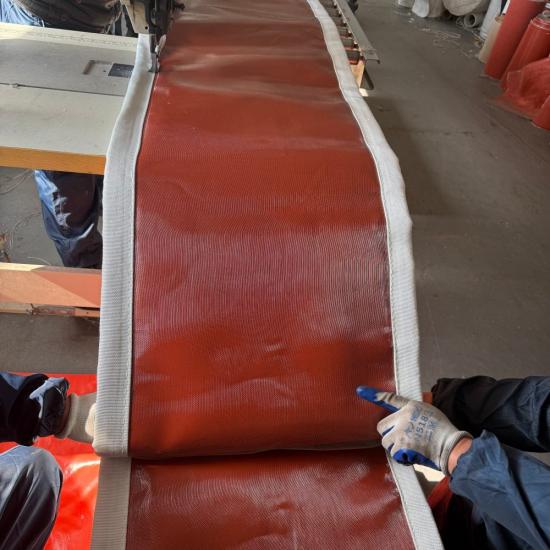
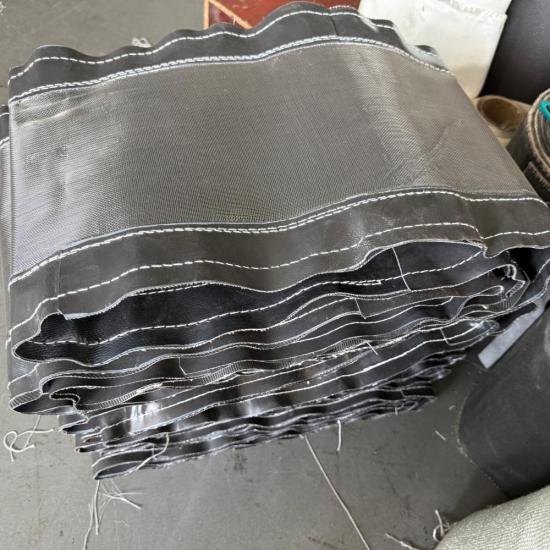
Badan fleksibel biasanya diproduksi dari lapisan tekstil rekayasa dan kain berlapis, bukan dari bellow logam yang dibentuk. Tergantung pada kondisi penggunaan, konstruksinya dapat mencakup membran penyegel gas, kain penguat, insulasi termal, dan lapisan pelindung bagian dalam.
Konstruksi ini menghasilkansambungan ekspansi kainsangat cocok untuk penampang saluran yang besar, media gas panas, dan aplikasi yang membutuhkan pergerakan ke lebih dari satu arah.
Sistem saluran udara industri memuai dan menyusut seiring perubahan suhu operasional. Jika pergerakan ini sepenuhnya dibatasi, tegangan termal dapat ditransfer ke dinding saluran, flensa, kipas, sambungan peralatan, dan struktur pendukung.
Fleksibelsambungan ekspansi saluran kainIni menciptakan zona pergerakan terkontrol antara bagian-bagian yang berdekatan. Saat saluran mengembang, menyusut, atau bergeser, bagian yang fleksibel mengubah geometrinya daripada memaksakan seluruh perpindahan ke komponen yang kaku.
Tergantung pada geometri sambungan dan desain sistem, sambungan ekspansi dapat mengakomodasi:
Tidak ada satu pun konstruksi kain yang cocok untuk setiap sambungan ekspansi industri. Desain yang andal dimulai dari kondisi operasi yang sebenarnya.
Sistem berlapis ganda dapat berisi beberapa lapisan fungsional, yang masing-masing melakukan tugas yang berbeda:
Lapisan penyegel gas membantu menahan medium proses dan dipilih berdasarkan suhu, komposisi gas, kelembapan, paparan bahan kimia, dan kondisi tekanan. Tergantung pada aplikasinya, bahan fiberglass berlapis atau bahan berbasis fluoropolimer dapat dipertimbangkan.
Lapisan penguat memberikan stabilitas dimensi dan dukungan mekanis pada elemen fleksibel. Serat kaca anyaman dan tekstil teknis lainnya dapat dipilih sesuai dengan sifat mekanis dan termal yang dibutuhkan.
Sistem suhu tinggi mungkin memerlukan lapisan isolasi untuk mengurangi suhu yang mencapai material penyegel luar. Ketebalan dan material isolasi harus dirancang sesuai dengan suhu gas, batas suhu eksternal, dan geometri sambungan.
Jika sambungan ekspansi terpapar kecepatan gas tinggi, partikel padat, atau media abrasif, sistem pelindung internal atau pelapis aliran mungkin diperlukan untuk mengurangi benturan langsung pada elemen fleksibel.
Pemilihan material adalah salah satu bagian terpenting daridesain sambungan ekspansi non-logamBSTFLEX bekerja dengan berbagai macamkain suhu tinggidan tekstil teknis berlapis, memungkinkan konstruksi fleksibel untuk disesuaikan dengan berbagai lingkungan industri.
| Jenis Material | Fungsi Khas | Pertimbangan Seleksi |
|---|---|---|
| Kain Serat Kaca | Reinforcement and thermal-resistant textile layer | Temperature, weight, weave and mechanical strength |
| Silicone Coated Fiberglass | Flexible outer or sealing layer | Temperature, weather resistance, flexibility and environment |
| PTFE Coated Fabric | Gas sealing and chemical-resistant layer | Chemical compatibility, temperature and process media |
| Silica Fabric | High-temperature thermal protection layer | Temperature exposure and insulation requirement |
| Insulation Materials | Reduction of temperature through the joint construction | Operating temperature and required external surface temperature |
| Metal Mesh or Internal Liner | Mechanical or flow protection where required | Gas velocity, abrasion, particles and installation geometry |
For particularly demanding thermal environments, BSTFLEX can evaluate high-silica textile solutions such as96% high temperature silica fabricas part of the overall thermal protection system where technically appropriate.
The final material combination should always be determined from actual application data rather than temperature alone.
Ahigh temperature fabric expansion jointis not defined by one universal maximum temperature. The permissible operating temperature depends on the complete joint construction, including the hot-face protection, insulation package, reinforcement fabric, gas seal membrane, external cover and the temperature distribution through those layers.
For this reason, BSTFLEX evaluates both process temperature and the temperature expected at individual layers of the expansion joint. This approach allows the materials to be selected for their actual operating environment rather than relying on a single generic temperature rating.
When requesting a high-temperature joint, provide the normal operating temperature, maximum or upset temperature, exposure duration and process medium wherever possible.
BSTFLEX manufactures expansion joints according to the shape and dimensions of the customer's ducting system.
Arectangular fabric expansion jointis commonly used on large industrial ductwork, boiler systems, air-handling equipment, furnace connections and flue-gas ducts. Corner geometry, movement distribution and attachment design require particular attention because stress is not distributed in the same way as on a circular joint.
Round and circular fabric expansion joints are suitable for cylindrical duct systems, fan connections, exhaust lines and process-air installations. Diameter, face-to-face length and movement requirements can be manufactured according to the installation.
Non-standard shapes, transitions and asymmetric configurations can be evaluated when standard round or rectangular joints cannot match existing equipment.
Different attachment arrangements can be supplied depending on the duct design and replacement requirements.
Belt-type fabric expansion jointsuse a flexible belt attached to mating metalwork and are suitable for many large industrial duct applications.
Flanged fabric expansion jointscan be manufactured as complete assemblies where the flexible element, insulation components and supporting metalwork are supplied as an integrated unit.
For replacement projects, BSTFLEX can manufacture according to customer drawings, dimensional records or available sample information.
BSTFLEXnon metallic fabric expansion jointscan be engineered for a broad range of hot-air and process-gas ducting systems.
Fabric joints can be used in boiler ducting, flue-gas handling systems, fan connections and other large gas-transport ducts where thermal movement and vibration need to be isolated.
Cement production involves large ductwork exposed to heat, dust and continuous equipment movement. Expansion joints may be used around kiln-related ducting, process-air systems, fans and gas-handling equipment.
Furnace exhaust, hot-air ducts and process ventilation systems may require flexible connections capable of accommodating thermal growth while operating around demanding high-temperature equipment.
Where process gases contain corrosive constituents, joint materials should be selected according to chemical compatibility as well as temperature.
Fabric joints can compensate for expansion between heated equipment and downstream ductwork while helping isolate movement and vibration.
Flexible expansion joints can reduce the transmission of mechanical vibration between fans, blowers and rigid ducting.
High-temperature exhaust and hot-gas systems often require a flexible transition capable of accommodating repeated thermal cycles and installation movement.
| Design Factor | Fabric Expansion Joint | Metal Expansion Joint |
|---|---|---|
| Flexible Element | Technical fabric or composite textile construction | Formed metallic bellows |
| Typical System | Industrial ducting and gaseous-media systems | Pipe and process systems including higher-pressure service |
| Large Cross Sections | Well suited to large duct dimensions | Possible but design becomes more complex |
| Multidirectional Movement | Can accommodate axial, lateral and angular movement | Depends strongly on bellows configuration |
| Vibration Isolation | Good flexibility for fan and duct connections | Application dependent |
| Material Selection | Composite layers can be selected for thermal and chemical conditions | Determined mainly by metal alloy and bellows design |
The correct choice depends on pressure, temperature, process medium, duct geometry, required movement and applicable engineering standards. Fabric and metallic expansion joints should therefore not be treated as universally interchangeable products.
Selecting an expansion joint only by duct size or maximum temperature is not sufficient. Several operating parameters interact with each other and influence the appropriate construction.
The following information should be evaluated:
Providing this information allows the flexible element and supporting components to be selected around the real service conditions.
For faster engineering evaluation and quotation, send as much of the following information as available:
| Duct Size | Diameter or width × height |
| Joint Shape | Round, rectangular, square or custom |
| Installation Length | Face-to-face dimension |
| Operating Temperature | Normal continuous temperature |
| Maximum Temperature | Maximum or upset temperature and duration |
| Pressure | Normal and design pressure |
| Process Medium | Air, flue gas, exhaust gas or other process gas |
| Axial Movement | Compression and extension |
| Lateral Movement | Required offset movement |
| Angular Movement | Required angular displacement if applicable |
| Environment | Indoor, outdoor, chemical, dusty, wet or abrasive |
| Drawing | PDF, CAD drawing, dimensional sketch or existing joint details |
| Quantity | Prototype, replacement quantity or production requirement |
Industrial expansion joints are frequently project-specific components rather than standard catalogue parts. BSTFLEX supports customized manufacturing according to drawings, dimensional requirements and operating conditions.
Custom options may include:
Because BSTFLEX also works directly with thermal protection textiles and coated high-temperature fabrics, material construction can be evaluated as part of the expansion joint design instead of treating the flexible element as a generic component.
BSTFLEX focuses on engineered thermal protection and technical textile products for industrial applications. Our manufacturing capabilities cover high-temperature woven fabrics, coated fabrics, insulation materials and fabricated thermal components, providing a practical material base for customfabric expansion jointprojects.
A non metallic expansion joint is a flexible connection used primarily in ducting and gaseous-media systems to accommodate thermal expansion, vibration, misalignment and multidirectional movement. Its flexible element is normally manufactured from technical fabrics, coated textiles, insulation and other non-metallic materials selected according to the operating environment.
A fabric expansion joint uses a flexible textile or composite membrane, while a metallic expansion joint normally uses formed metal bellows. Fabric joints are widely used on large industrial ducts and gas-handling systems, while metallic bellows are common in piping and applications where system pressure or process requirements favor metallic construction.
Yes. Properly designed fabric expansion joints can accommodate axial, lateral and angular movement as well as combinations of these movements. The required movements must be provided during design so the joint geometry can be selected correctly.
There is no single temperature rating for every fabric expansion joint. Temperature capability depends on the flexible membrane, insulation package, hot-face protection, sealing material and overall joint construction. BSTFLEX selects the material system according to the normal operating temperature, maximum temperature and exposure conditions.
Depending on the application, materials may include fiberglass fabric, silicone-coated fiberglass, PTFE-coated fabric, silica fabric, insulation materials and metallic protective components. Each layer is selected according to its specific function.
Yes. Fabric expansion joints are widely applicable to industrial flue-gas and hot-gas ducting when the construction is engineered for the process temperature, chemical composition, moisture, pressure, gas velocity and movement requirements.
Yes. BSTFLEX manufactures rectangular, round, square and other custom configurations according to duct dimensions and installation requirements.
In many cases, yes. Dimensional measurements, photographs, operating conditions and information from the existing expansion joint can be used for an initial evaluation. A complete drawing or physical sample provides additional information when available.
The most useful information includes duct dimensions, joint shape, face-to-face length, operating and maximum temperature, pressure, process medium, axial movement, lateral movement, angular movement, gas velocity, chemical exposure, flange arrangement and required quantity. Drawings are strongly recommended where available.
Jika Anda mencari pengganti sambungan ekspansi atau mengembangkan sistem saluran industri baru, kirimkan gambar dan kondisi operasional Anda ke BSTFLEX. Tim kami dapat mengevaluasi bentuk, dimensi, material fleksibel, konstruksi insulasi, dan persyaratan pergerakan yang dibutuhkan untuk aplikasi Anda.
Untuk permintaan penawaran harga, mohon berikan informasi berikut:Dimensi saluran, suhu, tekanan, media proses, persyaratan pergerakan, panjang instalasi, kuantitas, dan gambar yang tersedia.
Minta Penawaran untuk Proyek Sambungan Ekspansi Kain Anda
sebelumnya:
pelindung panas jari tigSelanjutnya:
Selimut Isolasi Laras Mesin Injeksijika Anda memiliki pertanyaan atau saran , silakan tinggalkan pesan kepada kami , kami akan membalas Anda sesegera mungkin!

 English
 français
 Deutsch
 русский
 italiano
 español
 português
 Nederlands
 العربية
 日本語
日本語 한국의
한국의 Türkçe
 Polski
 Tiếng Việt
 slovenský