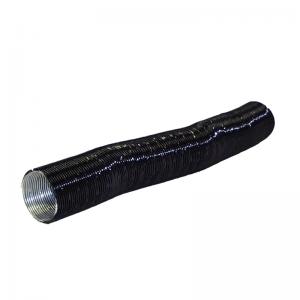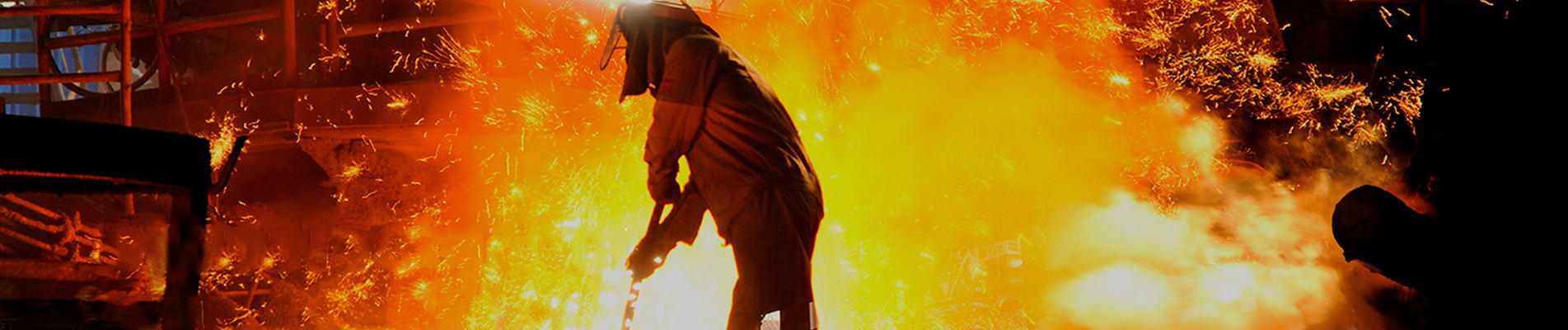
Asambungan ekspansi kainadalah sambungan fleksibel yang dipasang pada saluran industri untuk menyerap pergerakan antar bagian peralatan atau saluran udara. Alih-alih memaksakan pemuaian termal, getaran, atau perubahan keselarasan pada struktur baja yang kaku, bagian fleksibel tersebut berubah bentuk saat sistem bergerak.
Sambungan ekspansi kain umumnya digunakan dalam sistem yang mengalirkan udara panas, gas buang, gas cerobong asap, dan media proses gas lainnya. Elemen fleksibelnya dapat terdiri dari kain teknis tenun, kain berlapis, membran penyegel gas, lapisan penguat, dan isolasi termal yang dipilih sesuai dengan kondisi operasi aktual.
Karena elemen fleksibelnya bukan logam, jenis sambungan ini juga banyak disebut sebagaisambungan ekspansi non-logamatausambungan ekspansi kain non-logam.
Untuk desain industri khusus, lihatSambungan Ekspansi Kain Non-Logam BSTFLEX.
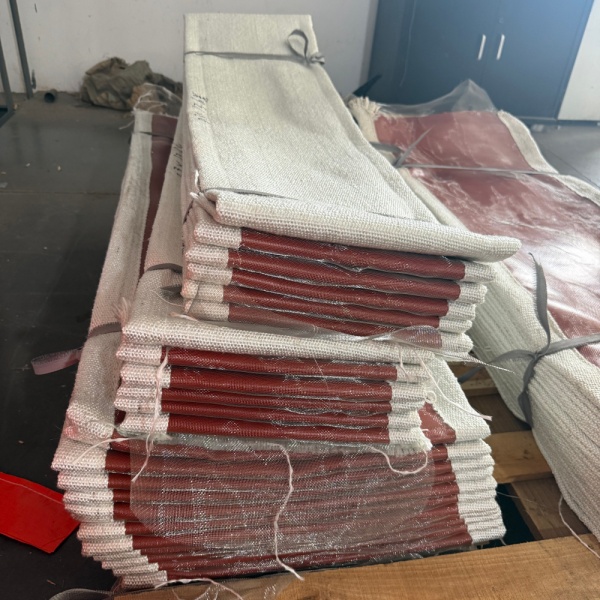
Sambungan ekspansi kain adalah bagian fleksibel yang dirancang khusus dan ditempatkan di antara dua bagian yang relatif kaku dari sistem saluran udara. Tujuannya adalah untuk memungkinkan pergerakan yang terkontrol sambil mempertahankan sambungan yang diperlukan antara bagian-bagian tersebut.
Saluran industri jarang sekali tetap tidak berubah dimensinya selama pengoperasian. Ketika tungku, boiler, sistem pembuangan, atau saluran proses memanas, struktur logam di sekitarnya akan memuai. Ketika mendingin, ia akan menyusut kembali. Kipas dan peralatan berputar juga dapat menimbulkan getaran, sementara toleransi pemasangan dapat menciptakan sedikit perbedaan antara komponen yang berdekatan.
Jika pergerakan ini ditransmisikan langsung melalui saluran udara kaku, hal ini dapat menciptakan beban tambahan pada:
Sambungan kain menciptakan zona fleksibel di mana sebagian dari pergerakan tersebut dapat terjadi tanpa mengharuskan seluruh struktur saluran berperilaku sebagai rakitan yang kaku.
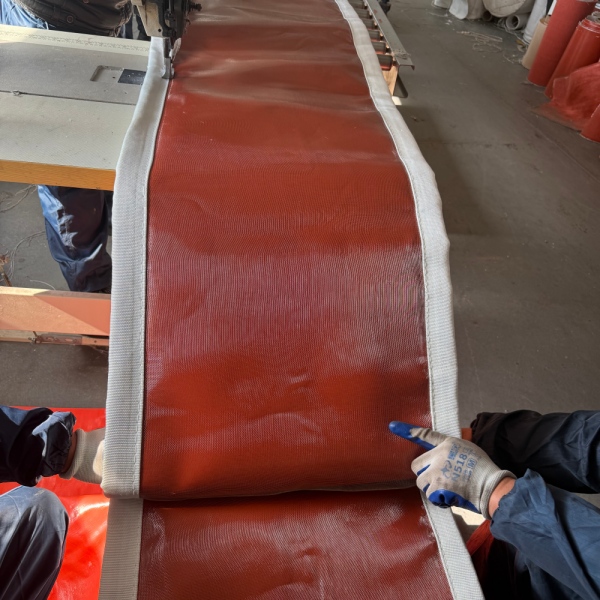
Istilahsambungan ekspansi non-logamDeskripsi ini merujuk pada elemen fleksibel, bukan setiap komponen dalam rakitan lengkap.
Rangka logam, batang penjepit, pelapis, atau perangkat keras lainnya masih dapat digunakan di sekitar sambungan. Namun, bagian yang melakukan gerakan fleksibel utama dibuat dari kain, elastomer, tekstil berlapis, membran laminasi, atau kombinasi dari bahan-bahan ini, bukan dari bellow logam yang dibentuk.
Perbedaan ini penting karena sambungan ekspansi berbahan kain dan logam memiliki perilaku yang berbeda.
Bellow logam mengakomodasi pergerakan dengan melenturkan lipatan logam yang dibentuk. Sambungan ekspansi kain menggunakan fleksibilitas sabuk tekstil atau kompositnya untuk mengubah bentuk saat saluran bergerak.
Untuk saluran industri berukuran besar, terutama yang membawa media gas pada tekanan yang relatif rendah, konstruksi ini dapat memberikan kemampuan pergerakan yang cukup besar dalam ruang instalasi yang kompak.
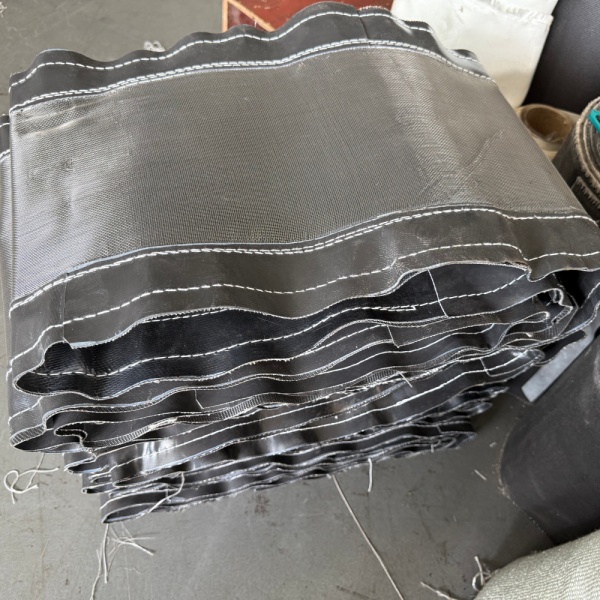
Prinsip kerja dasarnya sederhana.
Bayangkan dua bagian saluran udara panas yang dipisahkan oleh celah yang terkontrol. Sebuah elemen kain fleksibel menjembatani celah ini dan terpasang dengan aman di sekeliling setiap bagian saluran.
Ketika saluran udara memanas dan memuai, jarak atau keselarasan antara kedua bagian berubah. Alih-alih menahan pergerakan tersebut seperti halnya sambungan kaku, sabuk fleksibel tersebut mengubah bentuknya.
Tergantung pada desainnya, sambungan tersebut dapat merespons beberapa jenis gerakan.
Kompresi aksial terjadi ketika jarak antara kedua bagian saluran menjadi lebih pendek di sepanjang garis tengah.
Hal ini sering terjadi ketika pemuaian termal menyebabkan satu bagian saluran udara bergerak mendekati bagian lainnya. Bagian yang fleksibel tersebut akan terkompresi atau terlipat secara terkontrol untuk mengakomodasi pengurangan jarak tersebut.
Ekstensi aksial adalah kondisi kebalikannya. Jarak antara bagian penghubung meningkat sepanjang sumbu longitudinal.
Elemen kain harus memiliki geometri yang cukup agar dapat meregang tanpa mengalami peregangan berlebihan.
Pergerakan lateral terjadi ketika salah satu sambungan saluran bergeser ke samping relatif terhadap sambungan lainnya.
Hal ini sangat penting dalam sistem saluran udara besar di mana pergerakan peralatan, pemuaian termal ke arah lain, atau geometri pemasangan menciptakan pergeseran, bukan sekadar kompresi atau pemanjangan.
Gerakan sudut terjadi ketika kedua permukaan penghubung tidak lagi sejajar.
Sabuk fleksibel tersebut berubah bentuk secara tidak merata di sekeliling tepinya, memungkinkan satu sisi terkompresi sementara bagian lainnya meregang.
Sistem industri nyata tidak selalu bergerak hanya dalam satu arah. Pergeseran aksial, lateral, dan angular dapat terjadi secara bersamaan.
Ini adalah salah satu alasan mengapasambungan ekspansi saluran kainHal ini sangat berguna dalam tata letak saluran yang kompleks. Geometri sambungan dapat dirancang berdasarkan kombinasi pergerakan yang diharapkan, daripada memperlakukan setiap perpindahan secara independen.
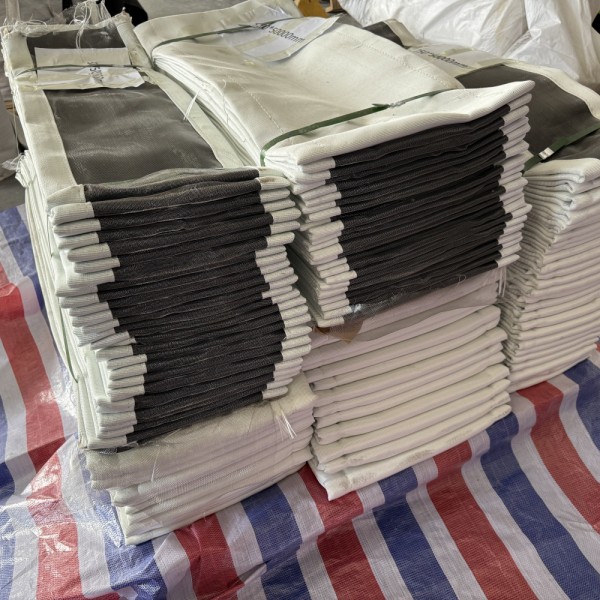
Ekspansi termal adalah alasan paling umum untuk memasang sambungan ekspansi, tetapi bukan satu-satunya alasan.
Persyaratan pergerakan lengkap dapat disebabkan oleh beberapa kondisi pengoperasian.
| Menyebabkan | Apa yang Terjadi dalam Sistem | Peran Sambungan Ekspansi |
|---|---|---|
| Ekspansi Termal | Saluran logam memuai seiring peningkatan suhu. | Memungkinkan pergerakan dimensi yang terkontrol. |
| Penyusutan Termal | Saluran udara menyusut selama penghentian operasi atau pendinginan. | Allows the system to return toward its cold position |
| Fan Vibration | Mechanical vibration is transferred from rotating equipment | Provides a flexible connection between equipment and ducting |
| Misalignment | Connecting duct faces may not be perfectly aligned | Can accommodate specified offsets within the joint design |
| Structural Movement | Supports or equipment may move relative to each other | Provides a controlled flexible section |
| Operating Cycles | Repeated heating and cooling creates cyclic movement | Accommodates repeated dimensional changes when correctly designed |
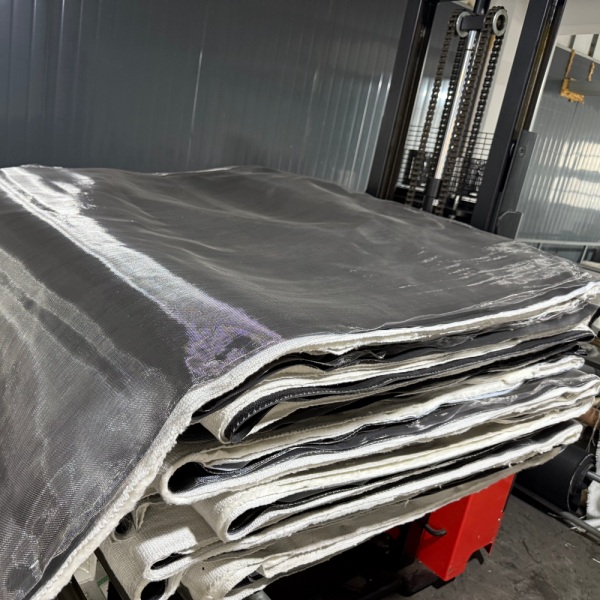
A fabric expansion joint should not be viewed simply as a piece of cloth connecting two ducts.
The flexible section is an engineered material system. Depending on service conditions, it may use a single flexible layer or several different layers, each selected for a specific function.
The outer layer forms part of the flexible envelope and may also provide resistance to weathering, environmental exposure or external mechanical conditions.
This layer helps contain the process gas. Its material must be compatible with the expected temperature, gas composition, moisture and chemical exposure.
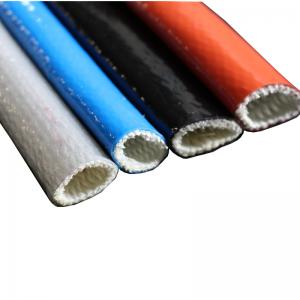
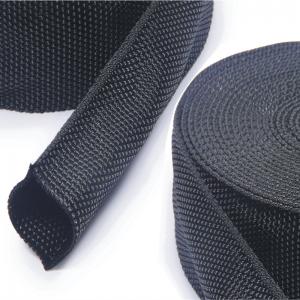
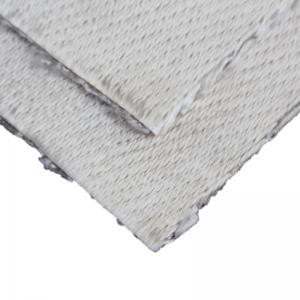
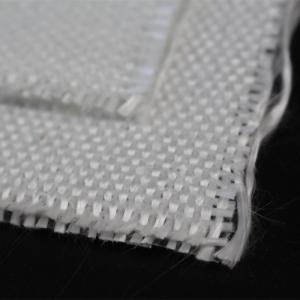
Reinforcement provides mechanical support and dimensional stability to the flexible element. Fiberglass and other technical textile constructions are commonly considered depending on temperature and mechanical requirements.
High gas temperature does not necessarily mean every layer of an expansion joint should be exposed directly to that temperature.
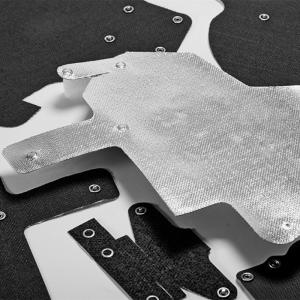
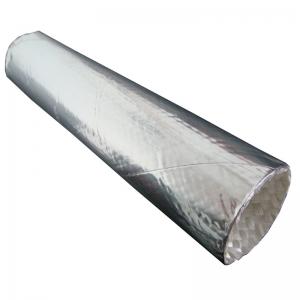
An insulation package can reduce heat transfer from the process side toward temperature-sensitive sealing or outer layers.
Hot gas velocity, ash, dust or abrasive particles can damage an unprotected flexible surface. Some systems therefore require an internal liner, baffle or other protection to shield the joint from direct gas flow and particulate impact.
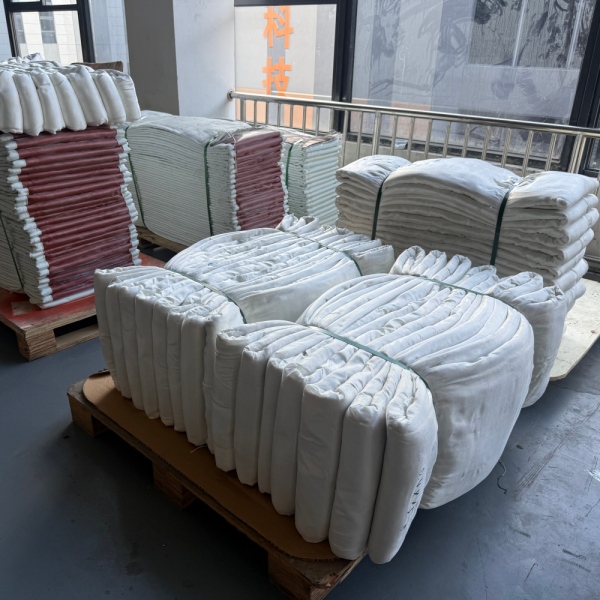
One material rarely provides every property required by a severe industrial application.
For example, a material with excellent temperature resistance may not provide the best gas sealing. A highly flexible sealing material may require reinforcement. A chemically resistant membrane may need insulation to keep its operating temperature within an acceptable range.
As a result, manyfabric expansion jointsuse a combination of materials rather than one fabric performing every function.
Typical material families include:
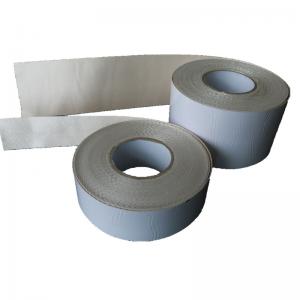
BSTFLEX also manufactures a broad range ofhigh temperature fabrics, allowing material construction to be evaluated according to thermal, chemical and mechanical requirements.
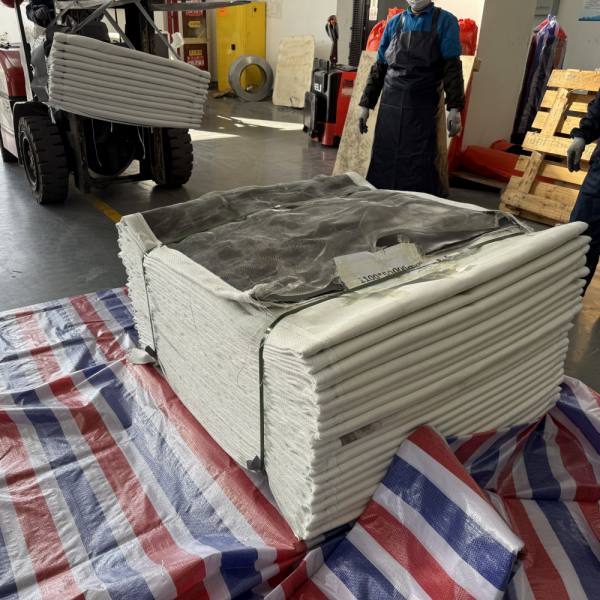
Fabric joints are mainly associated with industrial gas-handling and ducting systems rather than conventional high-pressure liquid piping.
Typical applications include the following.
Boilers, furnaces and combustion equipment can generate hot flue gases that must travel through large duct networks. These ducts experience significant dimensional change between ambient and operating temperatures.
Exhaust ducts connected to engines, industrial furnaces, thermal processing equipment or pollution-control systems may require movement compensation between hot equipment and downstream ducting.
Power plants use large gas-handling systems around boilers, fans, air-handling equipment and emission-control installations. Thermal growth and vibration can occur at multiple connection points.
Cement production combines heat, large duct dimensions, dust and continuous process operation. Flexible expansion sections may be required around kiln-related systems, fans and process ducts.
High-temperature furnaces, hot-air systems and exhaust ducts in steel and metal-processing plants can generate significant thermal movement.
Placing a flexible connection between rotating equipment and rigid ducting can help prevent all equipment movement from being transmitted directly into the surrounding duct structure.
Large ducting systems used with filtration, scrubber, flue-gas treatment and other air-pollution-control equipment often need flexible connections between process components.
Both products are intended to manage movement, but they should not be considered interchangeable simply because they share the term “expansion joint.”
| Characteristic | Fabric Expansion Joint | Metallic Bellows |
|---|---|---|
| Flexible Element | Fabric, coated textile or composite membrane | Formed metal bellows |
| Common Application | Large industrial ducts and gaseous-media systems | Industrial piping and engineered duct or process systems |
| Movement Method | Flexible belt changes geometry | Metal convolutions flex |
| Large Duct Sizes | Well suited to custom large cross-sections | Requires application-specific metallic design |
| Multidirectional Movement | Can accommodate several movement directions in one flexible section | Depends on bellows geometry and assembly design |
| Material System | Can combine several fabric, coating and insulation layers | Primarily determined by metallic alloy and bellows construction |
Pressure, temperature, process medium, movement, duct size and system design must all be considered before deciding which expansion joint technology is appropriate.
A flexible joint can help isolate vibration between connected components because its flexible element does not behave like a completely rigid metal duct section.
This is useful near fans, blowers and other equipment that produces mechanical vibration.
However, vibration should still be treated as an engineering input. Frequency, amplitude, equipment arrangement and joint geometry all influence performance. A fabric expansion joint should not be selected only because a system is described as “vibrating.”
There is no universal movement value that applies to every fabric expansion joint.
Movement capability depends on:
For this reason, axial, lateral and angular movements should be stated separately when specifying a custom expansion joint.
A request such as “50 mm total movement” is less useful than specifying how that movement occurs.
For example:
These values are examples of how movement information can be communicated, not standard ratings for every joint.
There is also no single temperature rating that defines all fabric expansion joints.
The allowable process temperature depends on the complete construction.
A high-temperature joint may be designed so that the process-side protection and insulation reduce the temperature reaching the gas-sealing membrane and external flexible layers.
Temperature selection should therefore consider:
This is why specifying only “high temperature fabric expansion joint” is insufficient for engineering selection.
A manufacturer needs more than the nominal duct dimensions to select a reliable construction.
The most useful project information includes:
| Design Information | Typical Details Required |
|---|---|
| Duct Geometry | Round, rectangular, square or special shape |
| Dimensions | Diameter or width and height |
| Face-to-Face Length | Available installation distance |
| Temperature | Normal and maximum process temperature |
| Pressure | Positive or negative operating and design pressure |
| Process Medium | Hot air, flue gas, exhaust gas or other process gas |
| Axial Movement | Compression and extension |
| Lateral Movement | Required transverse offset |
| Angular Movement | Required angular displacement |
| Chemical Conditions | Acidic, alkaline, moisture or other process exposure |
| Particulate Loading | Dust, ash or abrasive particles |
| Installation Environment | Indoor, outdoor, weather exposure or confined area |
Anon metallic expansion jointshould be considered when an industrial ducting system needs flexibility and the operating conditions are suitable for a fabric-based construction.
Typical reasons include:
The final decision should always be based on actual system conditions rather than the product name alone.
Some basic constructions can be standardized, but industrialfabric expansion jointsare frequently customized.
Two ducts with the same dimensions may require completely different expansion joints if they operate at different temperatures, carry different gases or experience different movements.
Important differences may include:
This is why drawings and operating data are particularly valuable when sourcing replacement or OEM fabric expansion joints.
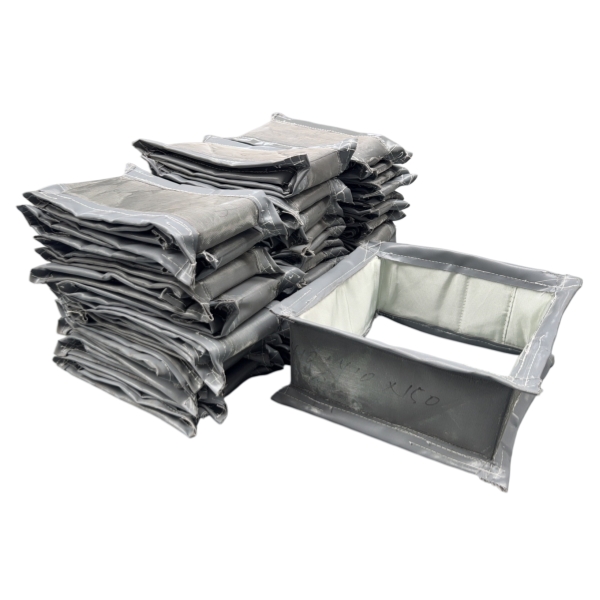
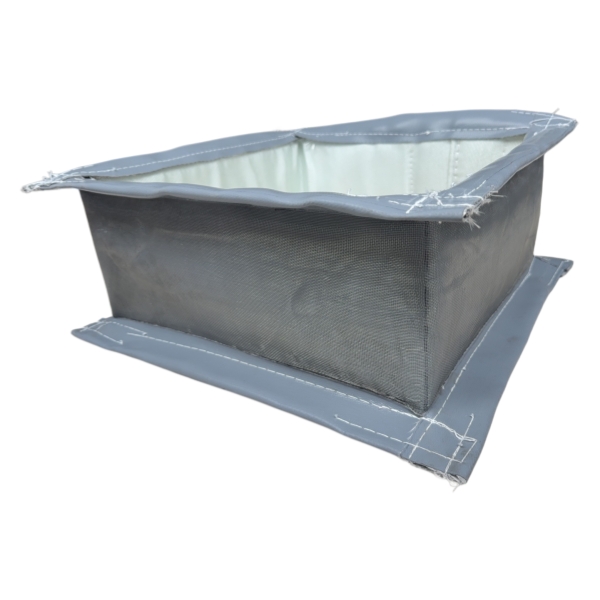
Rectangular joints are widely used on large industrial duct systems. Their corner sections require careful design because the flexible element does not deform identically along straight sides and corners.
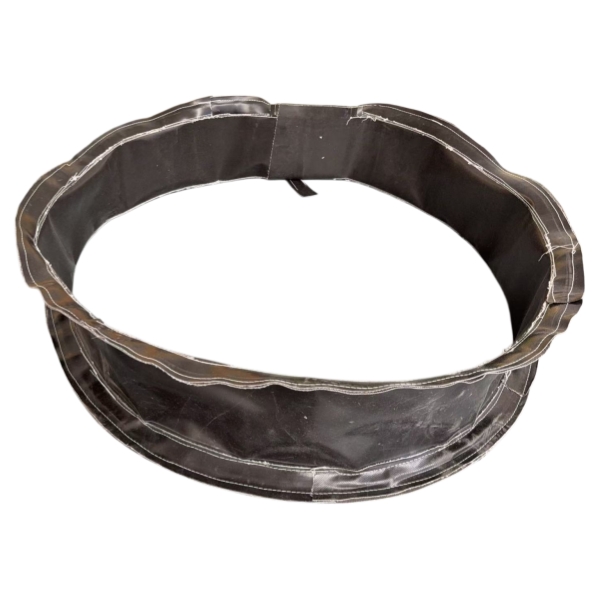
Round joints are used on circular ducting, fan connections and exhaust systems. The circumference provides a continuous attachment surface around the duct.
Square configurations are similar in principle to rectangular designs but may be required by specific duct or equipment layouts.
Transitions, non-standard dimensions and application-specific geometries can be manufactured when existing industrial equipment cannot accept a standard shape.
Expansion joint service life depends heavily on correct specification and installation.
Potential failure mechanisms include:
A damaged joint should therefore not automatically be replaced with an identical copy without understanding why the original unit failed.
For replacement projects, operating history can be as valuable as dimensional information.
In industrial ducting, the terms are often used for closely related products. A fabric expansion joint uses a flexible non-metallic fabric or composite element, so it falls within the broader non-metallic expansion joint category. The exact terminology varies by industry and construction.
It provides a flexible connection between sections of industrial ductwork so thermal expansion, contraction, lateral displacement, angular movement, vibration and specified misalignment can be accommodated without making the connection completely rigid.
Typical locations include industrial exhaust ducts, flue-gas systems, furnace and boiler ductwork, fan connections, cement plants, power-generation equipment, steel-processing facilities and air-pollution-control systems.
Yes. Depending on the design, they can accommodate axial compression, axial extension, lateral movement, angular movement and combinations of these movements.
No. Fiberglass is an important reinforcement and high-temperature textile, but complete expansion joints may combine coated fiberglass, PTFE-coated fabric, silicone-coated textiles, silica fabrics, insulation and other materials according to operating conditions.
Ya, ketika sistem material lengkap dirancang untuk suhu proses dan kondisi gas yang sebenarnya. Aplikasi suhu tinggi seringkali membutuhkan beberapa lapisan fungsional dan perlindungan yang tepat antara aliran gas panas dan elemen penyegel fleksibel.
Tidak secara otomatis. Sambungan ekspansi berbahan kain dan logam memiliki karakteristik tekanan, pergerakan, suhu, dan mekanik yang berbeda. Kondisi sistem harus dievaluasi sebelum mengubah teknologi sambungan ekspansi.
Informasi yang berguna meliputi lebar dan tinggi atau diameter saluran, panjang antar muka, dimensi flensa, susunan baut, bentuk sambungan, dan ruang pemasangan yang tersedia. Suhu operasi, tekanan, media, dan persyaratan pergerakan juga sangat penting.
BSTFLEX mengembangkansambungan ekspansi kainUntuk aplikasi saluran industri, pembuangan, udara panas, dan gas buang. Konstruksi dapat disesuaikan dengan geometri saluran bundar, persegi panjang, persegi, dan non-standar, dengan sistem material yang dipilih sesuai dengan suhu, tekanan, media proses, pergerakan, dan kondisi pemasangan.
Jika Anda sedang mengembangkan sistem baru atau mengganti sambungan yang sudah ada, tinjau hal-hal berikut ini:Sambungan Ekspansi Kain Non-Logam BSTFLEXHalaman produk untuk opsi konstruksi dan kustomisasi yang tersedia.
Untuk evaluasi teknik, kirimkan dimensi saluran Anda, suhu normal dan maksimum, tekanan operasi, media proses, pergerakan aksial, pergerakan lateral, panjang pemasangan, jumlah, dan gambar yang tersedia.

 English
 français
 Deutsch
 русский
 italiano
 español
 português
 Nederlands
 العربية
 日本語
日本語 한국의
한국의 Türkçe
 Polski
 Tiếng Việt
 slovenský